Knowledge Centre
Providing rapid medical guidance and expert health insights for informational purposes. Our guides come from a Harley Street clinic, but they do not replace a professional consultation.
Do you need a blood test, a last period, or a referral first?
Written by Mr Stephen Lingam · Reviewed by Dr Penny Sheehan (GMC 6056535) on 25/09/2026
Key takeaways
- NHS.uk says you can contact a GP if you think you have symptoms of menopause or perimenopause and want to know what your options are.
- Waiting for that 12-month mark before you speak to a doctor is a common mistake, because the difficult months are often the ones while bleeding is still happening.
- NICE menopause guidance is public on this point: in otherwise healthy women over 45 with typical symptoms, FSH is not required to diagnose menopause.
- Medical Express Clinic's menopause clinic is a GP clinic, not a consultant waiting list.
- The clinic offers two different appointments, and they are not the same length or the same job.
- Hormone replacement therapy is discussed only if it is appropriate after the history, current medicines and any suitable recent results have been reviewed, and a prescription is not guaranteed at the first visit.
You have usually been waiting for one of three things: a blood test that will confirm it, a last period so the label feels official, or a specialist letter before anyone will sit down and listen. Those delays are how hot flushes, broken sleep, mood changes and brain fog get parked as something you will deal with later. Later is not a condition of UK menopause guidance, and it is not a condition of booking here.
The question is simpler than the wait makes it feel. Can you talk to a doctor about perimenopause now, while periods are still happening, without a laboratory result and without a consultant referral? You can. Perimenopause is the stretch before menopause, when hormones are already changing and symptoms can already be getting in the way of work, sleep and ordinary days. NHS.uk says you can contact a GP if you think you have symptoms of menopause or perimenopause and want to know what your options are. That conversation does not start after the last bleed, and it does not start after a follicle-stimulating hormone result.
Do you have to wait for periods to stop?
Waiting for that 12-month mark before you speak to a doctor is a common mistake, because the difficult months are often the ones while bleeding is still happening.
NHS.uk describes menopause as a natural change that usually affects women between 45 and 55, though it can happen earlier. Perimenopause is the time leading up to it, during which periods may come more often or less often, and bleeding may get heavier or lighter, before they stop. Menopause itself is reached when you have not had a period for 12 months, after which it is called postmenopause.
Sleep can already be broken, mood can already have shifted, and hot flushes and night sweats can already be interrupting meetings and nights. NHS.uk notes that symptoms usually last for 7 to 9 years, sometimes longer, and that they can change over that time. A year of waiting is a year of those symptoms going unnamed. NHS.uk also says early advice can help reduce the effects on health, relationships and work.
Hormonal contraception can make the picture harder to read. Some methods make periods irregular or stop them altogether, and it is still possible to become pregnant during perimenopause. Bring that history into the room rather than delaying the conversation until a period chart looks tidy. NHS.uk also asks you to contact a GP if you still have periods but you are bleeding more rather than less, and to get any vaginal bleeding checked if you have not had a period for 12 months or more.
Do you need a diagnostic blood test first?
NICE menopause guidance is public on this point: in otherwise healthy women over 45 with typical symptoms, FSH is not required to diagnose menopause.
The laboratory result people wait for is usually FSH, or a private hormone panel ordered in the hope that a number will settle the argument. The same guidance identifies perimenopause, without laboratory tests, in otherwise healthy women aged 45 or over who have recently started vasomotor symptoms and any change in their menstrual cycle. It identifies menopause, again without laboratory tests, if they have not had a period for at least 12 months and are not using hormonal contraception.
That is not an anti-test slogan. Hormone levels fluctuate during perimenopause, so a single blood result does not diagnose menopause. Other blood tests can still matter if the doctor is looking for another cause, such as thyroid disease, anaemia or a metabolic problem. Those tests answer a different question from whether a number can prove you are menopausal. NICE does consider using serum FSH in people aged 40 to 45 with menopause-associated symptoms including a change in menstrual cycle, and in people under 40 in whom menopause is suspected. Even then, a single result is not enough to diagnose premature ovarian insufficiency. If you already have recent results, bring them, since suitable recent bloods can avoid repeat tests. If you do not have them, you still do not have to wait at home for a kit to come back before you book.
Do you need a specialist referral?
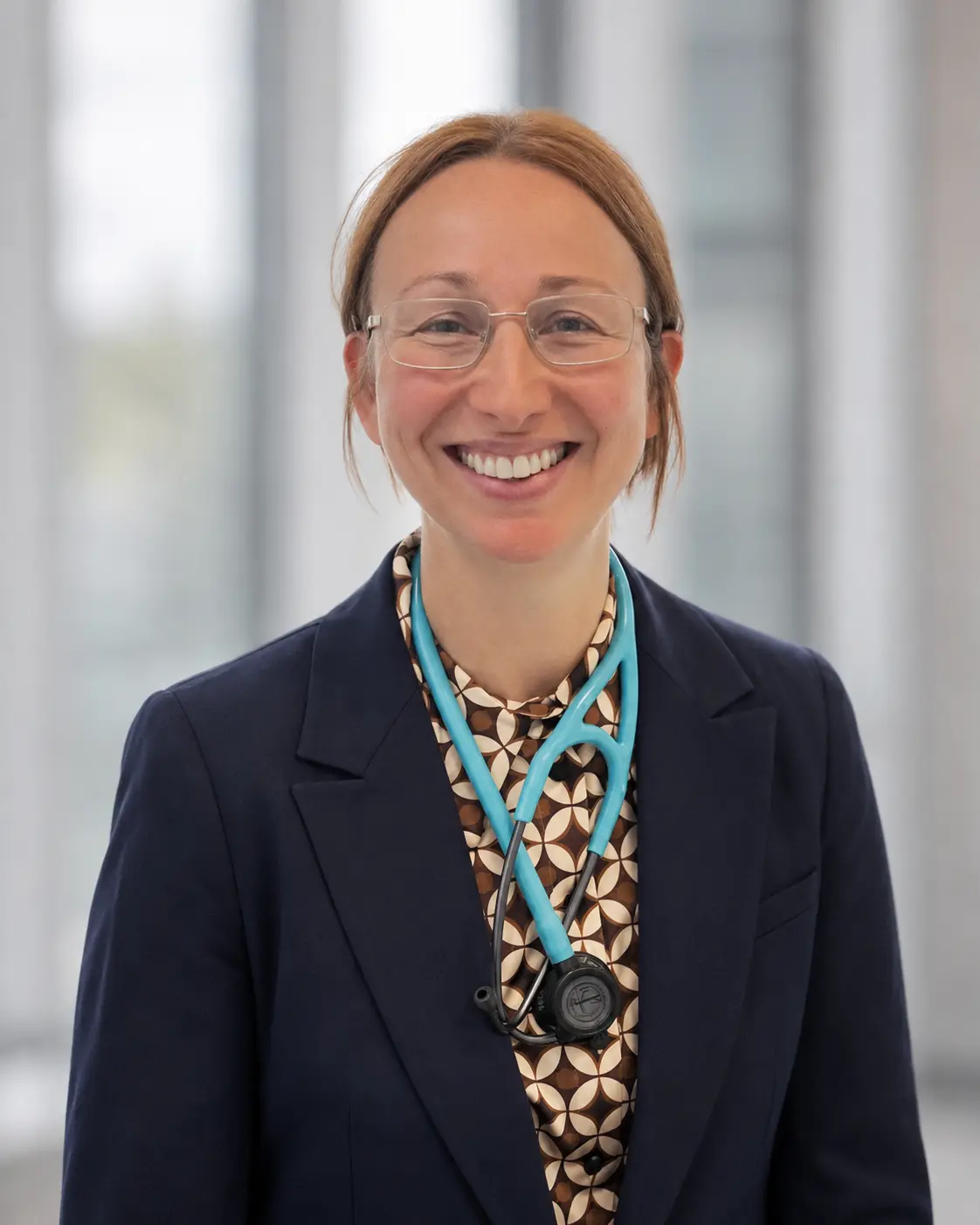
Medical Express Clinic's menopause clinic is a GP clinic, not a consultant waiting list. Dr Penny Sheehan, GMC 6056535, sees women at 117a Harley Street on Mondays and Wednesdays, and you can book without a GP referral. The visit is for the history of what has changed, a view on whether the pattern fits perimenopause or menopause, and a plan for what, if anything, would help. If you have been waiting for a letter before you felt allowed to mention night sweats, you can stop waiting for that letter. A specialist is the right clinician for some problems, named below, but ordinary perimenopause symptoms do not have to queue behind one. Bring a medicine list, a note of what has changed, and any recent results you already hold, even if they feel incomplete. The time is better spent on the decision than on reconstructing the last two years from memory.
What can the symptoms look like?
Menopause and perimenopause do not look the same in every woman. Women book this clinic with hot flushes, night sweats, broken sleep, mood changes, brain fog, joint pain, a change in libido, vaginal dryness, weight change, palpitations or urinary symptoms, and often with several of those at once. Those symptoms can have other causes. Thyroid disease can mimic flushes, palpitations and mood change. Iron deficiency can mimic fatigue and brain fog. Anxiety, medicines, alcohol and shift work can wreck sleep without any hormone story. Assessment is therefore a clinical judgement made after the history, not a label applied because a search result named menopause.
Palpitations still deserve a proper check. NHS.uk includes a fast heartbeat among the reasons to contact a GP. New, severe or rapidly worsening symptoms are not a planned menopause slot. They belong in same-day GP or emergency care. A sudden change can be something else, and it should not wait for a Monday or Wednesday clinic.
How do the two visits differ?
The clinic offers two different appointments, and they are not the same length or the same job.
| Visit | What it is for |
|---|---|
| Focused GP consultation | The shorter visit: history, any suitable recent results, and whether this looks like perimenopause or menopause and treatment is worth discussing |
| Comprehensive menopause health screen | The longer visit: a longer GP consultation plus DEXA, a digital mammogram, spirometry, Seca 525 body composition, bundled hormone, thyroid and metabolic bloods, and follow-up at 3 and 6 months |
A focused GP consultation is the shorter visit, in which Dr Sheehan takes the history, reviews what has changed, looks at any suitable recent results, and talks through whether this looks like perimenopause or menopause and whether treatment is worth discussing. Blood tests can still be arranged if they would change the plan, but they are not bundled into that shorter visit.
The comprehensive menopause health screen is the longer visit for women who also want a midlife baseline in one package. It includes a longer GP consultation plus DEXA bone density scanning, a digital mammogram, spirometry, body composition analysis on the Seca 525, bundled hormone, thyroid and metabolic bloods, and follow-up consultations at 3 months and 6 months. Those investigations inform the conversation. They do not, on their own, diagnose menopause or decide that HRT will be prescribed.
Book the focused consultation if you want the history and a plan, and book the screen if you also want that bundled baseline. If you already know the question is an existing prescription, a transfer from another clinic, or later monitoring, the HRT clinic is a related route, and prescribing detail sits on that page. Hormone replacement therapy is discussed only if it is appropriate after the history, current medicines and any suitable recent results have been reviewed, and a prescription is not guaranteed at the first visit. If HRT is not the right treatment, non-hormonal options and lifestyle strategies may be discussed instead.
When is this GP clinic the wrong booking?
Postmenopausal bleeding, heavy or irregular bleeding, or pelvic pain needs a gynaecology assessment: at Medical Express Clinic with Dr Hikmat Naoum, Consultant Gynaecologist. Any bleeding after the menopause should be checked promptly. For menopause care itself, the sister clinic also runs a specialist menopause service. New, severe or rapidly worsening symptoms need same-day GP or emergency assessment, not a booked Monday or Wednesday menopause visit.
What helps beforehand?
Write down what has changed, because a list of sleep, mood, flushes, cycles and medicines saves the appointment from becoming a reconstruction of the last two years.
- Bring recent blood results if you have them, since suitable recent work can avoid repeat tests.
- Bring the names of current medicines and any hormonal contraception, as those alter both symptoms and how periods can be read.
- You can book while you are still having periods, without an FSH result and without a specialist letter.
- If you are under 45, say your age at the start.
- NICE treats that group differently from women over 45 with typical symptoms.
- If the main question is an HRT prescription you already hold, say so when you book so you are not in the wrong clinic diary.
What should you avoid?
Do not wait for periods to stop before you mention night sweats, brain fog or broken sleep.
- Perimenopause happens while bleeding is still going on.
- Do not treat a single FSH or oestradiol result as a diagnosis.
- NICE does not require FSH to diagnose menopause in women over 45 with typical symptoms, and a fluctuating hormone level can look reassuring on a bad week.
- Do not sit on a referral list before you will talk to a GP, since this clinic does not need one.
- Do not book a planned menopause visit for new, severe or rapidly worsening symptoms.
- That is same-day GP or emergency care.
- Do not bring heavy, irregular or postmenopausal bleeding, or pelvic pain, into this GP clinic and expect consultant gynaecology.
- That needs a gynaecology assessment with Dr Hikmat Naoum, Consultant Gynaecologist. Any bleeding after the menopause should be checked promptly.
- If you do want the GP menopause assessment, Medical Express Clinic sees women with Dr Penny Sheehan at 117a Harley Street on Mondays and Wednesdays, without a referral.
- The details sit on the menopause clinic page, or you can call 020 7499 1991.
Related guides: what an HRT review involves and whether to see a GP or a gynaecologist first.
Sources

Mr Stephen Lingam
Managing Director
Executive leadership
Frequently asked questions
Do I need a blood test before I can talk about perimenopause?
No. NICE does not require FSH to diagnose menopause in women over 45 with typical symptoms. Bring recent results if you have them.
Do I have to wait until my periods stop?
No. Perimenopause happens while periods are still going, even if they have become irregular, heavier or lighter.
Do I need a specialist referral?
No. You can book the GP menopause clinic directly. Dr Sheehan sees women at 117a Harley Street on Mondays and Wednesdays.
Can one FSH result diagnose menopause?
No. A single blood result does not diagnose menopause. Hormone levels fluctuate during perimenopause.
Will I get HRT at the first visit?
Not necessarily. HRT is discussed only if it is appropriate. A prescription is not guaranteed at the first visit.
What is the difference between the two visits?
The focused GP consultation is the shorter history-and-plan appointment. The comprehensive menopause health screen adds DEXA, a digital mammogram, spirometry, a Seca 525 scan, bundled hormone, thyroid and metabolic bloods, and follow-ups at 3 and 6 months.
Need Professional Advice?
While our Knowledge Centre provides expert insights, it does not replace a face-to-face consultation with a doctor.
